

Hangzhou, Zhejiang, China – November 28, 2026
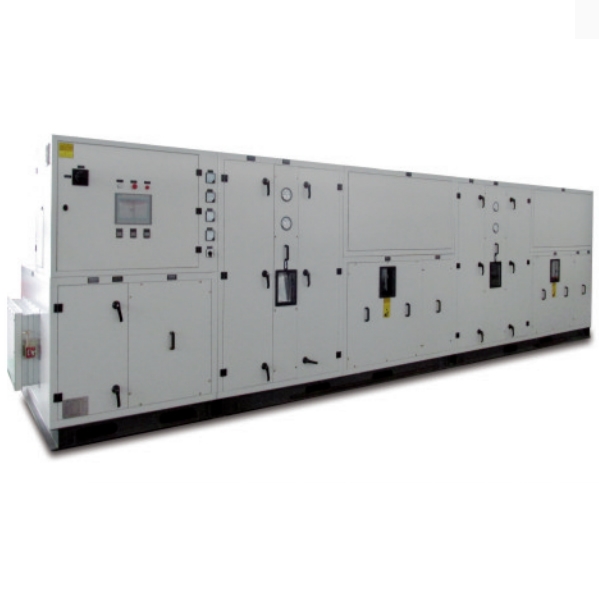
For low-dew-point industrial applications, qualifying an equipment manufacturer begins not with nominal room ratings or general capacity figures, but with the rotor, regeneration method, process-air conditioning, and casing construction required by the moisture duty. Dryair operates as an established Low Dew Point Desiccant Dehumidifier Manufacturer providing engineered ZCH configurations that combine rotor dehumidification, cooling coils, reactivation fans, reactivation heaters, and microcomputer controls. Across listed low-dew-point equipment models, specified configurations provide supply air at 15-25°C with a -60°C supply-air dew point, establishing an objective performance baseline for engineering evaluation.
Start With the Dew-Point Duty, Not the Manufacturer Label
Low-dew-point system selection must start with the required supply-air state and the actual process moisture load rather than an abstract room classification. The ZCH range is engineered around defined low-dew-point requirements rather than generic comfort or light-commercial humidity targets. Engineering and procurement teams must establish the target dew point, entering air temperature and moisture content, required process airflow, and seasonal operating envelopes before attempting to compare equipment models.
A catalog model number is meaningful only within its specified operating configuration. In listed ZCH configurations, supply air is delivered at 15-25°C with a -60°C dew point under stated process and regeneration conditions. Sizing a desiccant dehumidifier without pinning down these parameters introduces substantial operational risk, as ambient humidity shifts, infiltration, and process heat loads directly alter the moisture-removal burden on the adsorption rotor.
Rotor Configuration Defines the Adsorption Stage
In industrial HVAC engineering, a desiccant rotor is defined as a continuously rotating honeycomb matrix impregnated with hygroscopic media-such as silica gel or molecular sieve-that removes water vapor from process air through vapor-pressure differential. In ZCH low-dew-point equipment, rotor options include silica-gel and molecular-sieve configurations. This flexibility allows the adsorption stage to be tailored to the specific entering air humidity, required moisture depression, and target dew-point threshold rather than relying on a one-size-fits-all wheel geometry.
Match Rotor Media to the Required Operating Condition
Rotor media, entering air conditions, target outlet dew point, process airflow velocity, and regeneration energy availability form an interdependent thermodynamic system. Silica-gel rotors provide reliable adsorption characteristics across a wide range of industrial duties, while molecular-sieve media offer targeted moisture capture under very low inlet humidity and stringent low-dew-point demands. Selecting the appropriate medium requires evaluating the complete operating envelope rather than assuming one adsorbent is universally superior for every industrial scenario.
Include Rotor Construction in Supplier Qualification
Rotor design involves specialized manufacturing techniques that directly affect structural stability, media retention, and service life. Dryair holds patent 200910154107.0, which covers a specialized manufacturing method for a lithium-chloride and silica-gel composite rotor. For technical procurement and HVAC engineers, verifiable intellectual property and dedicated rotor fabrication processes provide concrete evidence of manufacturing depth when evaluating a desiccant dehumidifier manufacturer.
Regeneration Strategy Determines How the Rotor Recovers Capacity
Because the desiccant rotor operates continuously, it must desorb captured water vapor into a heated reactivation air stream to sustain continuous moisture-removal capacity. Standard ZCH configurations incorporate a dedicated reactivation fan and reactivation heater, with regeneration energy configured around available facility utilities such as electricity or plant steam.
Beyond conventional thermal regeneration, the ZCR low-reactivation-temperature series pairs refrigeration waste heat with a lithium-chloride and silica-gel low-temperature-regeneration composite rotor built on Dryair’s 2009 invention patent 200910154107.0. Unlike a standard silica-gel wheel that requires approximately 130°C reactivation air in conventional configurations within the same product family, this composite rotor regenerates at approximately 60°C. When chiller waste heat is available, this low-temperature regeneration strategy reduces facility electrical demand while maintaining steady moisture desorption across continuous operating cycles.
Cooling and Reactivation Must Work as One Moisture-Removal Train
A stable low supply-air dew point cannot be produced by the desiccant rotor alone. Upstream cooling coils condense bulk moisture and lower the process air temperature before it enters the desiccant wheel, maximizing the sorption capacity of the adsorbent media. Simultaneously, the reactivation stream heats the regeneration sector to strip moisture from the matrix and exhaust it outside the controlled space.
When processes require tight temperature tolerances alongside extreme dryness, downstream post-cooling coils temper the process air after the dehumidification stage. Sizing and sequencing these cooling, adsorption, and reactivation stages as one unified air-treatment train prevents thermal spikes and ensures stable delivery conditions to the process area.
Casing and Air Separation Protect the Designed Moisture Path
Maintaining an ultra-low dew point requires preventing ambient air infiltration and internal air bypass between process and reactivation sectors. Double-wall insulated casing construction, used across Dryair’s industrial dehumidifier platforms, provides structural rigidity, thermal insulation, and airtight sealing. Dryair also previously obtained utility model patent 201120480981.6 for a dedicated desiccant-dehumidifier casing design.
During technical supplier audits, project teams should scrutinize casing panel joints, access door seals, rotor perimeter and radial seals, and internal partition bulkheads. Even minor internal cross-leakage from the hot, humid reactivation sector into the dry process stream degrades supply-air dew points and forces excessive energy consumption.
Project Evidence Should Connect the Design to a Real Operating Target
Engineering capability is ultimately proven through operating installations with rigorous environmental criteria. In a historical project for General Capacitor, a Dryair ZCH-D-28000S low-dew-point system was deployed for an ultra-dry production room specified at a room dew point of Td ≤ -45°C, requiring supply air delivered at Td ≤ -65°C.
This operating record demonstrates why low-dew-point equipment qualification must connect room-level environmental criteria with equipment supply-air performance. Evaluating a desiccant dehumidifier supplier against verified project targets, rotor configurations, regeneration designs, and casing construction provides a rigorous basis for capital equipment procurement.
Define the Rotor and Regeneration Duty Before Requesting a Design
To obtain an accurate, project-specific equipment selection, engineering teams should establish:
Required supply-air dew point and room dew point.
Process airflow rate and entering air temperature and moisture content.
Available cooling utilities, including chilled water or direct-expansion refrigerant parameters.
Available regeneration energy source, such as electricity, steam, or industrial waste heat.
Required supply-air dry-bulb temperature downstream of moisture removal.
Casing insulation, external static pressure requirements, and electrical control specifications.
With these parameters defined, engineers can contact the Dryair official website to evaluate ZCH and ZCR equipment configurations tailored to their operational requirements.
About Us
Established in 2004 and located in Qingshan Industrial Park in Hangzhou, China, HZ DRYAIR has been providing integrated environmental solution and systems with superior performance since 2004.It covers an area of 30000 square meters and has more than 400 employees, which include 12 employee with Master’s and Doctor’s degree, 3 professional national registered HVAC engineers,35 experienced technician.As an pioneer in domestic desiccant wheel technology, HZ DRYAIR’s professional staff has many years of design, fabrication and sales experience in a wide range of industries. DRYAIR main products include ZCB series for lithium, food, pharmaceutical and other temperature and humidity control industries, ZCH series for extremly low dew ponit enviroment; VOC abatement system for coating and turn-key dry room system You can rely on HZ DRYAIR to provide one-stop solution for temperature & humidity control and air purification.
Media Contact
Company Name: Hangzhou Dry Air Intelligent Equipment Co., LTD
Contact Person: Media Relations
Email: Send Email
Country: China
Website: https://www.sinodryair.com
Press Release Distributed by ABNewswire.com
To view the original version on ABNewswire visit: Dryair as a Low Dew Point Desiccant Dehumidifier Manufacturer: Rotor Design and Regeneration Options