XIAN, SHAANXI, CHINA, September 29, 2026 /EINPresswire.com/ — Semiconductor fabs and nuclear power plants share one uncompromising requirement: water so free of ionic contamination that a single stray ion can compromise a wafer or corrode a reactor component. Reverse osmosis handles the bulk of desalination, but it cannot reach the final purity threshold these industries demand. That last step belongs to mixed bed ion exchange resin, the technology that polishes process water down to resistivity levels exceeding 18 megaohm-centimeters. Among manufacturers supplying this critical material, <a href="https://www.seplite.com/mixed-bed-ion-exchange-resin/“>China Leading Mixed Bed Ion Exchange Resin production has become a benchmark reference point for procurement teams evaluating suppliers for high-purity water systems. Understanding how this resin actually works, and what separates a reliable product from an inconsistent one, matters far more than most specification sheets suggest.
How Cation and Anion Resins Work Together in One Vessel
A mixed bed system combines strong acid cation resin in hydrogen form with strong base anion resin in hydroxide form, packed together in a single column rather than arranged in separate stages. As water flows through, cations attach to the negatively charged cation resin while anions bind to the positively charged anion resin. The cation resin releases hydrogen ions in exchange, and the anion resin releases hydroxide ions. These two byproducts combine instantly to form water molecules, leaving behind a stream with minimal total dissolved solids and extremely low conductivity. This simultaneous exchange, happening within the same bed rather than across sequential vessels, is what gives mixed bed resin its polishing advantage over standalone cation or anion units.
Why the Cation-to-Anion Ratio Is Not a Minor Spec
Engineers often treat resin ratio as a footnote, but it directly shapes performance under real operating conditions. A balanced 1:1 ratio, such as SEPLITE® MB10IND, suits applications with roughly even cation and anion loads. Water chemistries skewed toward higher anion concentrations call for a different balance. SEPLITE® MB20IND ships at a 1:1.5 cation-to-anion ratio, while MB30IND increases anion volume further to 1:2 for demineralization tasks where silica and carbonic acid removal place heavier demands on the anion resin. Selecting an undersized ratio for a given feedwater profile shortens the effective run length between regenerations and allows resistivity to drift downward before visual exhaustion indicators would normally suggest a problem. Getting this ratio right at the design stage prevents a category of operational headaches that only appear months into service.
Regeneration Strategy and Its Direct Line to Resistivity Stability
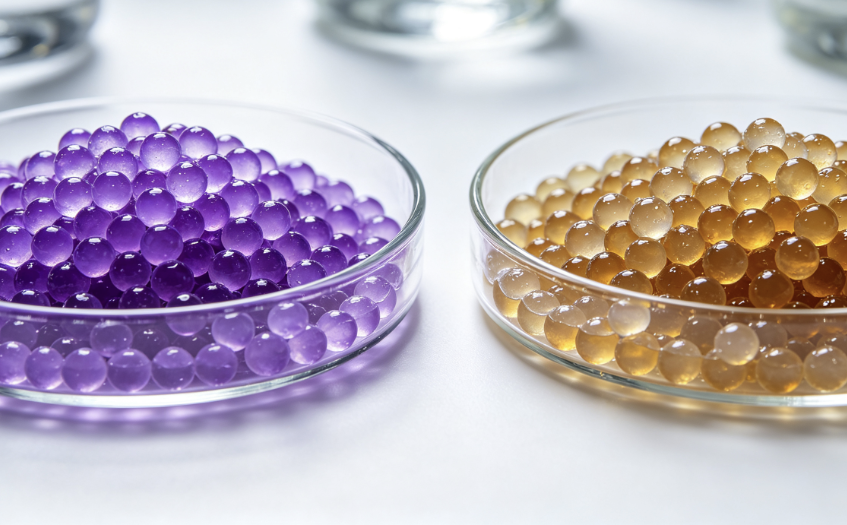
Regeneration method influences resin purity just as much as resin chemistry does. External regeneration, performed off-site in dedicated facilities, allows tighter control over chemical dosing, rinse cycles, and cross-contamination risk between cation and anion fractions. Counter-current regeneration protocols, which pass regenerant chemicals in the opposite direction of the service flow, typically achieve more complete conversion and lower residual ion leakage than co-current methods. For ordinary industrial deionization, these distinctions matter less. For semiconductor final polishing or nuclear-grade loops, they determine whether resistivity holds steady near the theoretical 18.3 megaohm-centimeter ceiling or fluctuates in ways that force premature resin replacement. Color-indicating resin variants, which shift from purple to amber upon exhaustion, give operators a practical way to monitor regeneration timing without relying solely on inline conductivity meters.
Matching Resin Grade to Application Tier
Not every application needs the same resin grade, and treating them identically wastes budget or, worse, risks contamination. Industrial process water and boiler feedwater typically rely on standard mixed bed products like MB10IND and MB30IND. Electronics manufacturing requires a step up: resin capable of supporting resistivity at or above 15 megaohm-centimeters, a threshold SEPLITE® Monojet™ MB610U was engineered specifically to meet for semiconductor final polishing stages. Nuclear power applications sit at the top of the purity hierarchy, demanding resistivity above 18 megaohm-centimeters alongside exceptional chemical stability and minimal ion release under sustained radiation and thermal stress. <a href="https://www.seplite.com/sunresin-profile/“>Sunresin (Sunresin New Materials Co. Ltd.) addresses this tier with its Monojet™ nuclear-grade series, including MB850NK, MB860NK, MB870NK, and MB960NK, each formulated with uniform particle size to reduce channeling and improve exchange kinetics inside reactor water systems. Aligning resin grade with actual application tier, rather than defaulting to a familiar product, is often the single most effective way to control long-term operating cost.
What Separates Reliable Resin Suppliers in High-Stakes Applications
Chemistry alone does not guarantee consistency. Production discipline does. A resin batch that performs flawlessly in testing but varies from the next batch introduces exactly the kind of instability that semiconductor and nuclear operators cannot tolerate. Sunresin New Materials Co. Ltd. maintains production control and quality control systems designed to hold batch-to-batch consistency within tight tolerances, supported by certifications including FDA registration, WQA Gold Seal, REACH compliance, and RoHS testing. These credentials are not decorative; they represent independent verification that raw material sourcing, polymerization, and finishing steps remain repeatable across production runs. For buyers evaluating suppliers, batch documentation and certification records deserve as much scrutiny as the resin’s published exchange capacity. Further technical background on how these resin systems support semiconductor and <a href="https://www.seplite.com/ultrapure-water-resin-solutions-for-semiconductor-and-nuclear-power-applications/“>nuclear power ultrapure water applications is available for procurement and engineering teams conducting deeper technical review.
A Practical Checklist for Evaluating a Mixed Bed Supplier
Procurement teams weighing supplier options can shorten the evaluation process by asking a few targeted questions. Does the manufacturer offer customizable cation-to-anion ratios matched to specific feedwater chemistry, or only fixed standard formulations? What regeneration method does the resin undergo, and can documentation confirm counter-current processing where required? Are color-indicating variants available to simplify exhaustion monitoring on-site? Finally, does the supplier provide traceable certification records covering FDA, WQA, REACH, and RoHS compliance for the specific product lot being purchased? Suppliers able to answer all four questions with documentation, rather than general assurances, typically prove more reliable over multi-year service contracts.
Moving From Specification to Supply
Selecting mixed bed ion exchange resin is rarely just a purchasing decision; it is an engineering decision with downstream consequences for yield, safety, and equipment life. Ratio, regeneration method, and grade tier interact in ways that a single data sheet cannot fully capture, which is why direct technical consultation often produces better outcomes than catalog selection alone. Sunresin continues to develop resin technology for ultrapure water systems across semiconductor, electronics, and nuclear power sectors, supported by manufacturing facilities and a research and development program focused on purity, stability, and long-term reliability. Additional technical specifications, product comparisons, and quotation requests are available at <a href="https://www.seplite.com/“>https://www.seplite.com/.
Sunresin
Sunresin
email us here
Legal Disclaimer:
EIN Presswire provides this news content “as is” without warranty of any kind. We do not accept any responsibility or liability
for the accuracy, content, images, videos, licenses, completeness, legality, or reliability of the information contained in this
article. If you have any complaints or copyright issues related to this article, kindly contact the author above.

Media gallery