
New York, New York – October 22, 2026 – PRESSADVANTAGE –
As national attention turns toward co-living and shared-room housing as a possible response to affordability pressures, Small Space Logic is addressing an often-overlooked practical question raised by the trend: how furniture, screens, curtains, and other dividers can create usable personal zones without compromising circulation, daylight, or safety. The clarification follows an October 19, 2026 Vox examination of legal challenges to unrelated-adult occupancy restrictions, legislative proposals, and expansion by shared-housing providers.
Small Space Logic notes that policy interest in shared housing should not be read as proof of a rapid rise in unrelated-roommate households. Zillow analysis reported by Vox found that approximately 8.2 million U.S. households were doubled up in 2024, up 4.3 percent from 2019, while the number of unrelated-adult households within that category fell slightly. Affordability context remains a factor, with Realtor.com Economic Research reporting that median asking rent for studios across the 50 largest U.S. metropolitan areas reached $1,422 in September 2026, still 11.9 percent above the comparable 2019 level.
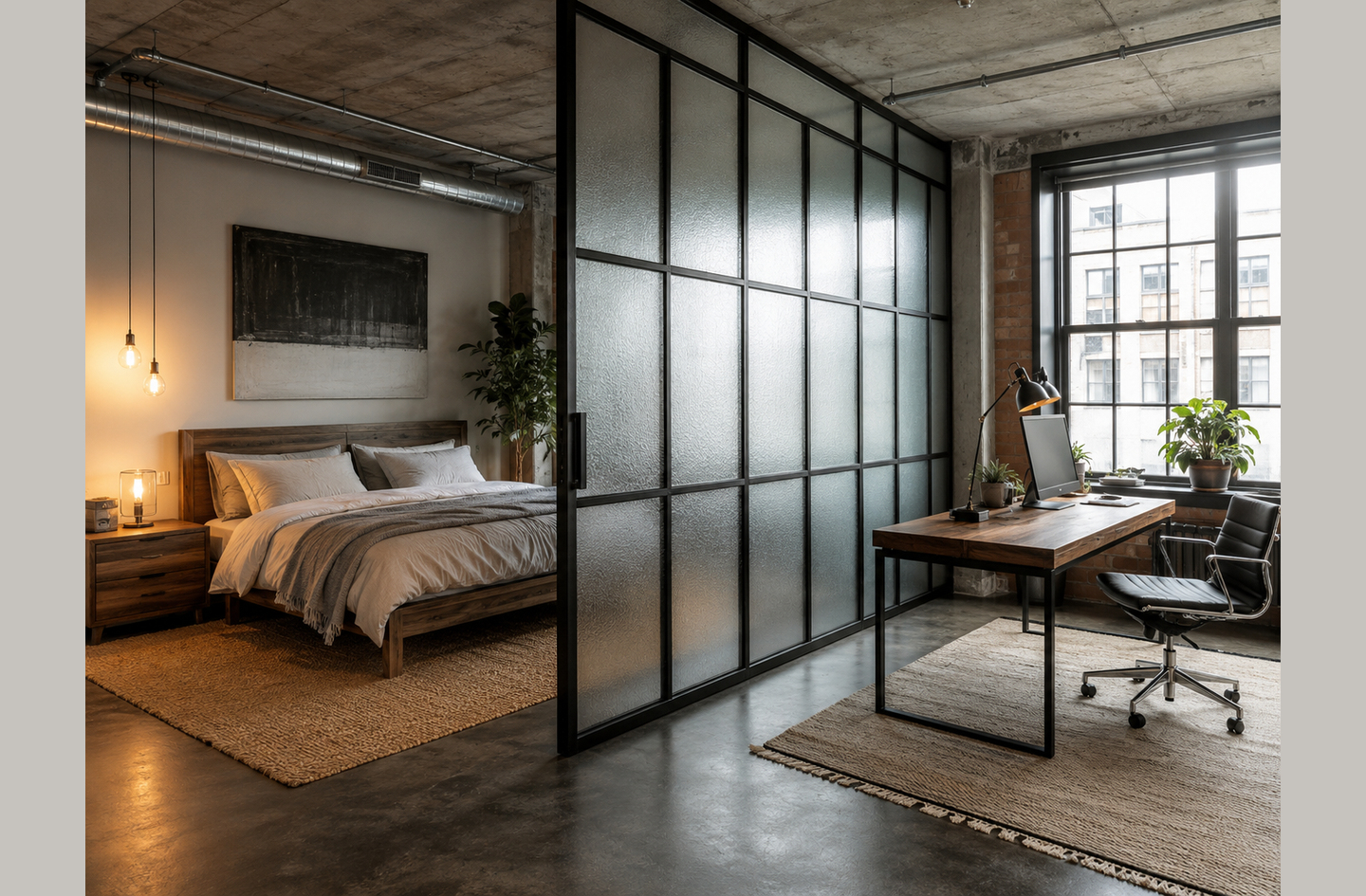
The central point from Small Space Logic is that shared-space privacy cannot be solved simply by adding a decorative divider. The company separates the question into three distinct considerations: visual privacy, acoustic privacy, and everyday usability. A divider may hide a sleeping area from view while doing little to prevent conversations from being overheard, and a bookshelf may provide storage and visual separation while introducing stability and circulation concerns.
“The right solution depends on the purpose of the zone, not the appearance of the divider,” said Oded Feigin, founder of Small Space Logic. “Before selecting anything, layout planning should protect walking paths and access to doors. The U.S. Access Board uses a 36-inch minimum for applicable accessible routes, which serves as a useful benchmark rather than a universal rule for every dwelling.”
Small Space Logic also stresses that visual privacy is not soundproofing. Curtains and screens can conceal a bed or workstation, but sound travels around open edges. National Research Council Canada research published in 1977 established that an opening equal to just 0.1 percent of a partition’s area can limit its effective Sound Transmission Class to approximately 30. These distinctions are covered in the Small Space Logic Soundproof Room Divider Guide, which explains what acoustic dividers can and cannot accomplish.
Storage dividers carry additional trade-offs. Taller furniture requires stability planning, and the Consumer Product Safety Commission encourages securing furniture according to manufacturer instructions to reduce tip-over hazards. The company recommends designing privacy around daily routines, noting that moving a noisy activity or rearranging furniture is sometimes more effective than purchasing another divider.
Readers can review the company’s planning methodology in the Small Space Logic Room Dividers Guide and the Small Space Logic Guide to Room Dividers for Small Apartments, both of which outline a step-by-step process for mapping zones, setting a footprint budget, and testing the daily reset.
Small Space Logic is an educational resource dedicated to optimizing small living spaces. Founded by Oded Feigin, a mechanical engineer who holds B.Sc. and M.Sc. degrees from UCLA and has managed residential construction and renovation projects, the company offers engineering-informed planning guidance rather than project-specific architectural or engineering certification.
###
For more information about Small Space Logic, contact the company here:
Small Space Logic
Oded Feigin
info@smallspacelogic.com
144-42 Jewel Avenue
Flushing, NY 11367
United States


