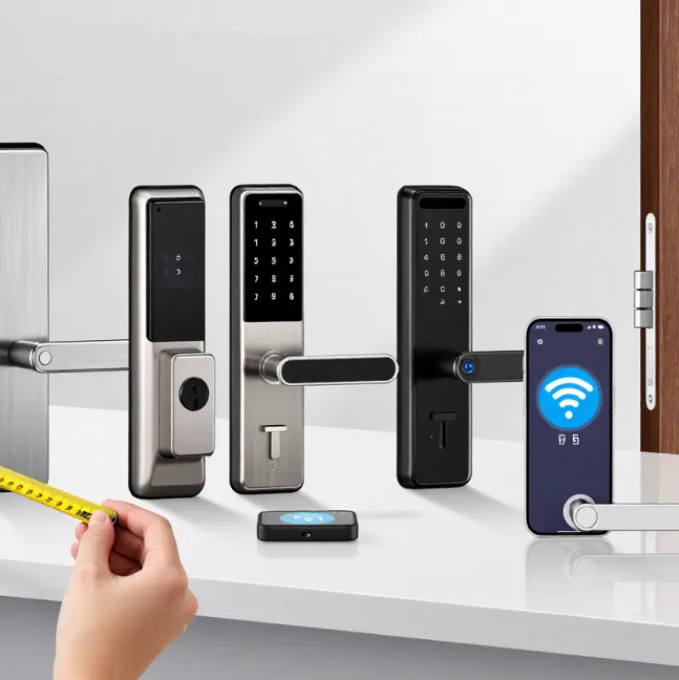
DONGGUAN, GUANGDONG, CHINA, October 29, 2026 /EINPresswire.com/ — For global buyers, choosing a Slim Smart Lock is not simply a matter of selecting the smallest body. It is a decision about security, compatibility, installation, and long-term support. Grand View Research reported continued expansion in the global smart lock market, driven by connected homes, rental properties, and hospitality applications. Yet market growth does not guarantee a suitable product. A narrow lock may fit a modern aluminum door but fail on an older timber door with a deep mortise.
The practical details matter. Measure the door thickness, backset, handle clearance, and available space around the cylinder. Check whether the lock supports common standards such as Bluetooth, Wi-Fi, Zigbee, or Matter. MarketsandMarkets identifies interoperability and connected-home integration as important smart lock market trends. However, wireless convenience can create new concerns. Buyers should review encryption practices, firmware update policies, authentication controls, and data storage arrangements. A reliable product should also offer emergency access, clear battery warnings, and a dependable mechanical override.
Real-world experience exposes weaknesses that product images hide. A lock may appear slim online, yet its interior module could obstruct a window handle or cabinet edge. Battery life may change sharply in cold climates or high-traffic buildings. Certification claims also require careful checking through recognized testing bodies, not promotional language alone. Reports from NIST emphasize strong authentication, secure updates, and risk-based cybersecurity practices for connected devices. No product is perfect. Reported market figures vary by research method, and installation conditions remain difficult to standardize. This guide helps global buyers compare Slim Smart Lock options with evidence, measurable dimensions, and realistic expectations.
Define Your Security, Door, and Connectivity Requirements
Choosing a Slim Smart Door Lock starts with defining your security needs, not its appearance. Consider who needs access and how often. A family may prefer temporary PINs for guests. A rental manager may need time-limited permissions and access records. Look for encrypted communication, automatic locking, tamper alerts, and a reliable mechanical override. Security features should be clearly explained in technical documents. Marketing language alone is not enough.
Your door determines whether the lock will fit. Measure the door thickness, backset, mortise, and available space around the handle. Check the cylinder type and opening direction. A narrow aluminum door may have less internal room than a solid wooden door. Take photographs before ordering. One small measurement can cause an expensive return. I would also check weather exposure, especially for doors facing heavy rain or coastal air. Compatibility tables can be useful, but they are not always complete.
Connectivity needs careful attention across countries. Bluetooth may suit nearby unlocking, while Wi-Fi supports remote control but often uses more battery. Check regional frequency support, app availability, data handling, and offline operation. A Slim Smart Door Lock should still provide dependable entry during an internet outage. Test the connection through your actual walls. It may work poorly near metal frames. Battery warnings should arrive early, although some systems make them easy to miss. Ask a qualified installer to confirm local door standards and safe installation practices.
Compare Slim Smart Lock Types and Installation Methods
Choosing a slim smart lock starts with comparing its mechanism, not its appearance. Retrofit locks sit over an existing thumbturn and usually preserve the outside cylinder. They are often faster to install and suit renters or older doors. Full-replacement mortise locks provide cleaner integration, but require accurate measurements and compatible internal dimensions.
Rim-mounted models can work well on narrow doors with surface-mounted hardware. Euro-cylinder and deadbolt systems need different bodies, backsets, and cylinder lengths. Check these details before ordering. A two-millimeter error can stop the latch from aligning. In my installation experience, door alignment causes more failures than the electronic module. That is easy to underestimate.
Installation methods also affect reliability. Screw-fixed fitting is generally stronger than adhesive mounting, especially on heavy doors. Wireless modules reduce cabling, while wired access systems may suit commercial projects with stable power. Grand View Research valued the global smart lock market at about USD 2.4 billion in 2023, forecasting a 19.6% compound annual growth rate through 2030. This growth reflects wider adoption, but market forecasts vary by definition and region. Buyers should still verify local door standards, emergency opening requirements, battery access, and fire-door compatibility. A slim body is useful. It is not automatically the safest choice.
Check Door Compatibility, Dimensions, and Locking Mechanisms
Choosing a slim Smart Lock begins with the door, not the mobile app. During installation checks, I measure door thickness at several points. Older doors are rarely perfect. Check the backset, latch shape, hinge side, and frame clearance. A lock may fit the panel but fail against a narrow frame. Do not trust measurements from a listing alone. Compare them with your actual door and existing lock body.
Slim dimensions can be misleading. Record the exterior height, width, depth, and interior thumb-turn space. Leave room for fingers, keys, and battery access. Check whether a handle, glass panel, or nearby wall blocks movement. A few millimeters can matter. I once overlooked a protruding trim piece, and the installation became unnecessarily difficult. That mistake still influences my inspection process.
The locking mechanism deserves equal attention. A deadbolt, latch, rim lock, and multipoint system require different fittings and installation methods. Confirm whether the Smart Lock turns the existing cylinder or replaces the complete lock case. Test the key from inside and outside before final tightening. The door should lock smoothly without force. Battery location, manual override, and low-power alerts also affect reliability. Regional door standards vary, so technical drawings and measured photos are more dependable than general compatibility claims. I still recheck alignment after installation, because a quiet motor can hide a poorly seated latch.
Evaluate Access Options, Security Features, and Privacy Controls
How to Choose a Slim Smart Lock for Global Buyers?
A slim smart lock should offer more than a narrow body. Check whether it supports keypad codes, mobile access, fingerprints, and a physical key. A Smart Lock App can manage users, view activity, and send battery warnings. Test access near the door, not only in a showroom. Bluetooth may work nearby, while remote control usually requires a secure internet connection. Confirm compatibility with your door thickness, cylinder type, and interior clearance before ordering.
Security settings deserve careful attention. Look for encrypted communication, two-factor authentication, automatic locking, and temporary guest codes. Guest access should expire at a chosen time, such as 9:00 p.m. on Friday. Activity logs should show who unlocked the door and when. Privacy matters too. Check whether data is stored locally or in the cloud, and review microphone, location, and contact permissions. Some settings may feel confusing. That is worth noticing.
Tips: Keep one trusted physical key outside the home, but not in an obvious hiding place. Choose a model with low-battery alerts and emergency power access. Disable unused app permissions. Update the firmware regularly. Also, test recovery steps before travel. A lost phone can expose weak habits. No system is perfect, and convenient access can sometimes reduce caution.
Assess Battery Life, Emergency Entry, and Maintenance Needs
A slim smart lock looks elegant, but its battery compartment deserves more attention than its finish. When evaluating a Wifi Smart Lock, check the battery type, estimated runtime, and warning method. A lock that lasts six months in a showroom may perform differently during cold, humid winters. Ask about test conditions. Short claims can mislead.
Choose a model with clear low-battery alerts on the keypad, phone, or indoor unit. I prefer warnings several days before shutdown, not one notification at midnight. Emergency entry should work without internet access. A concealed mechanical keyway, external backup power contact, or both can prevent a stressful lockout. Test the backup method before installation. A power bank may need the correct cable and contact position. Do not assume every emergency feature is equally practical.
Maintenance is usually simple, yet slim designs leave less room for batteries and moving parts. Inspect the latch every few months, remove dust, and tighten loose mounting screws. Replace batteries as a complete set, using the specified chemistry and matching cells. Keep a spare set indoors, away from heat and moisture. Software updates also matter. They can improve alerts, but installation may interrupt access for several minutes. I would test the door after every update, even when the app reports success. That small habit catches problems early.
Review Connectivity, App Support, Certifications, and Global Availability
Choosing a slim smart lock for global use starts with connectivity, not appearance. A narrow body may fit a metal door, yet poor signal can make daily access frustrating. Bluetooth works well beside the door and usually saves battery. Wi-Fi enables remote control, but it can increase power use and setup demands. Newer low-power mesh options may improve range, although phone and hub compatibility must be checked carefully. Test the lock behind your actual door. Signal matters.
App support deserves equal attention. Look for clear language choices, dependable firmware updates, guest permissions, activity logs, and recovery options when a phone is lost. An app should support local access methods, rather than relying on a distant server for every action. Check whether accounts, notifications, and cloud storage work in your target country. I have learned this the hard way: testing only on a strong network gives an incomplete impression. A lock that works only online is not dependable. App interfaces can also change after purchase.
Certifications provide useful evidence, but they are not a complete safety verdict. Confirm relevant electrical, radio, cybersecurity, and mechanical standards for each destination. Regional approval marks may differ, and the certificate should match the exact model and hardware version. Global availability includes replacement batteries, spare cylinders, installation guides, and responsive support. Ask about regional shipping and warranty handling before ordering. The thinnest lock is not always the wisest choice. Measure the door carefully, and keep a physical backup key. Small oversights matter.
Conclusion
Choosing the right Slim Smart Lock starts with understanding your security goals, door structure, and connectivity needs. Compare available lock designs and installation methods, then confirm that the lock fits your door’s thickness, dimensions, latch, cylinder, and locking mechanism. Consider whether you need keypad entry, mobile access, fingerprints, temporary codes, or physical keys, while also reviewing encryption, user permissions, activity records, and privacy controls.
A reliable choice should offer practical battery life, clear low-power warnings, and a dependable emergency entry method. Maintenance requirements should be simple, with accessible battery replacement and durable materials suited to the local environment. Before purchasing, check wireless compatibility, app support, language options, software updates, certifications, warranty coverage, and availability in your market. By evaluating these factors together, global buyers can select a Slim Smart Lock that balances convenience, security, installation flexibility, privacy, and long-term reliability.
Dongguan Youlian Intelligent Technology Co. Ltd.
Dongguan Youlian Intelligent Technology Co. Ltd.
Legal Disclaimer:
EIN Presswire provides this news content “as is” without warranty of any kind. We do not accept any responsibility or liability
for the accuracy, content, images, videos, licenses, completeness, legality, or reliability of the information contained in this
article. If you have any complaints or copyright issues related to this article, kindly contact the author above.

Media gallery