Artistic Landscape Features Discusses Material Durability in Monmouth County Conditions
Tinton Falls, United States – February 27, 2026 / Artistic Landscape Features – Tinton Falls /
Outdoor kitchens represent significant investments that need to withstand exposure conditions far more challenging than interior spaces face. Tinton Falls properties experience coastal humidity, salt air, frequent temperature fluctuations, and winter freeze thaw cycles that test material durability in ways that surprise homeowners accustomed to interior kitchen longevity. Material selection for outdoor kitchens determines whether these spaces maintain appearance and function for decades or require premature replacement that negates the value of initial investment.
The decisions extend beyond aesthetic preferences to fundamental questions about what materials can perform reliably under specific exposure conditions. Choices that work well inland may fail rapidly near the coast. Materials marketed as outdoor rated still vary dramatically in their resistance to salt air, moisture penetration, and thermal cycling.
Material Performance Under Coastal Conditions
Outdoor kitchen materials face exposure that degrades many products faster than manufacturers acknowledge in marketing materials. Salt air accelerates corrosion of metal components, even those treated or coated for outdoor use. Humidity penetrates porous materials and creates conditions for mold growth, staining, and structural deterioration. Freeze thaw cycles split materials that absorb moisture, and ultraviolet exposure degrades finishes and structural integrity of many synthetics.
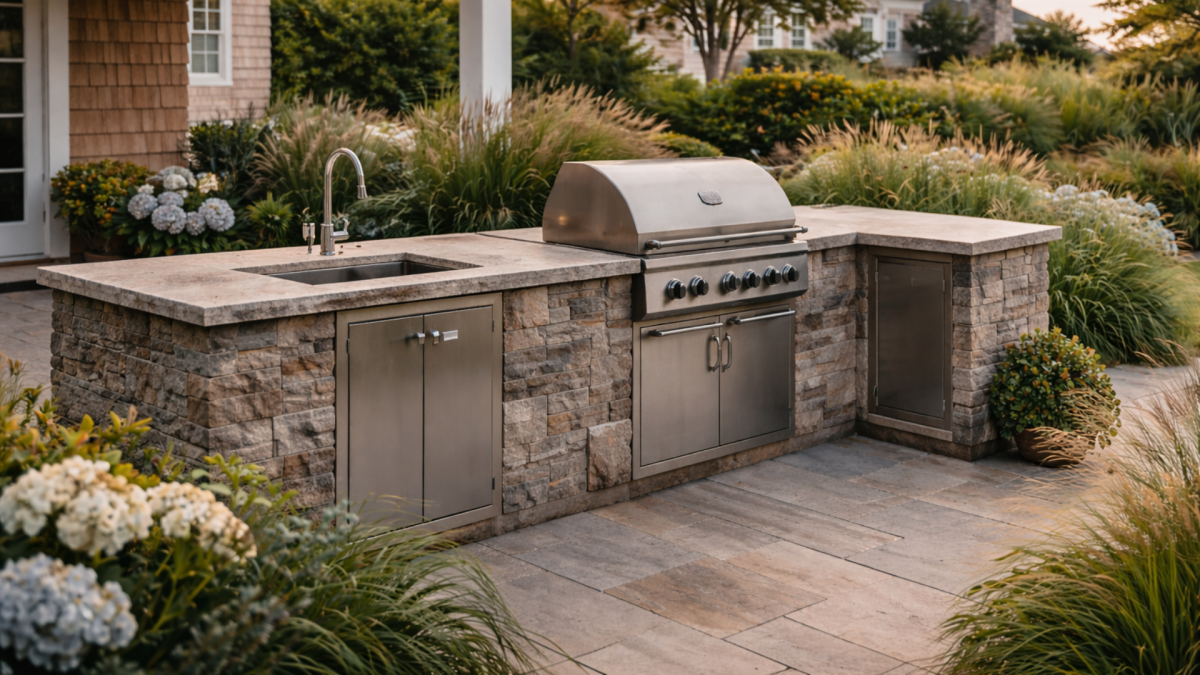
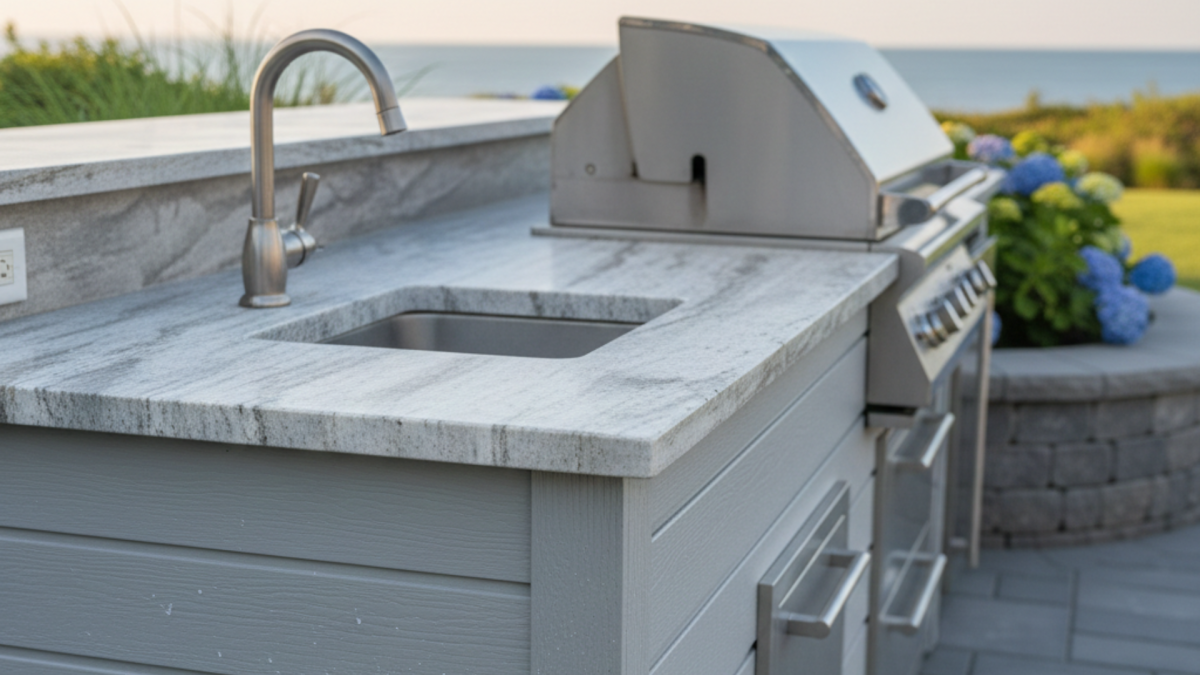
Countertop materials illustrate these challenges clearly. Granite and other natural stones vary significantly in their porosity and freeze thaw resistance. Some granite types develop surface spalling where thin layers flake away after repeated freezing of absorbed moisture. Tile countertops depend entirely on grout quality and maintenance, as grout failure allows water penetration that damages substrate materials and creates unsanitary conditions around food preparation areas.
Concrete countertops require sealers that need periodic reapplication to prevent moisture absorption and staining. The sealer quality and maintenance consistency determine whether concrete performs well or becomes a maintenance burden. Stainless steel countertops resist most weathering but show water spots and require regular cleaning to maintain appearance in humid coastal environments.
Cabinetry choices present even more critical decisions because cabinet failure often requires complete outdoor kitchen reconstruction. Wood cabinets, even those built with marine grade plywood and exterior finishes, face moisture penetration challenges that lead to swelling, warping, and eventual structural failure. The timeframe varies based on exposure severity and maintenance consistency, but wood cabinets near the coast typically show problems within five to ten years.
Polymer cabinets marketed for outdoor use vary dramatically in quality and performance. Some maintain structure and appearance well while others become brittle from ultraviolet exposure or warp from heat. The challenge for homeowners lies in distinguishing between products that will perform as promised and those that will disappoint after several years of exposure.
Stainless steel cabinetry offers the most reliable long term performance in coastal conditions but comes with higher initial cost and limited design flexibility compared to other options. The investment calculation depends on how long homeowners plan to remain in properties and how much they value avoiding future replacement costs and disruptions.
Planning Decisions That Affect Long Term Satisfaction
Material selection interacts with other design decisions in ways that amplify or mitigate exposure challenges. Covered outdoor kitchens that protect components from direct rain and snow extend material lifespan significantly compared to fully exposed installations. The degree of coverage influences which materials remain viable options and which face accelerated deterioration.
Appliance selection requires similar exposure consideration. Built in grills rated for outdoor use still vary in how well they resist salt air corrosion. Lower cost models may require replacement within five years while premium options last fifteen years or more. Side burners, refrigerators, and other appliances face the same exposure gradient, with performance directly related to how thoroughly manufacturers addressed coastal durability in their designs.
The location of outdoor kitchens on properties affects exposure severity. Installations on ocean facing sides of homes receive more direct salt air and weather than those on protected sides. Wind patterns, nearby vegetation, and proximity to salt water all influence how aggressively materials weather. These site specific factors should inform material selection rather than applying generic outdoor kitchen standards that may not suit particular locations.
Maintenance requirements differ significantly among material choices and deserve consideration during planning. Some materials need seasonal attention to maintain performance and appearance. Others require minimal maintenance but offer less design flexibility. Homeowners need realistic assessments of their willingness to perform ongoing maintenance before committing to materials that demand it.
Budget allocation between initial construction and expected maintenance or replacement costs requires careful analysis. Choosing more durable materials increases upfront spending but reduces lifetime costs when replacement needs are factored in. The reverse is also true, as budget materials may seem economical initially but cost more over time when premature replacement becomes necessary.
Material Evaluation in Real Projects
Artistic Landscape Features discusses material options in terms of performance expectations under specific site conditions rather than presenting generic recommendations. Conversations address how exposure severity at particular locations influences which materials will perform satisfactorily and which face predictable problems.
The company explains tradeoffs between different material categories so homeowners understand what they gain and sacrifice with each choice. Durability, maintenance requirements, aesthetic flexibility, and cost all factor into decisions that suit individual priorities and circumstances. Some families prioritize minimizing future maintenance and accept higher initial costs for materials that require little attention. Others prefer lower initial investment and accept more involved maintenance routines.
Design integration considers how outdoor kitchen materials coordinate with existing landscape elements and home architecture. Material choices affect visual coherence between outdoor kitchens and surrounding hardscaping, plantings, and structures. Colors, textures, and styles that complement rather than clash with existing features create more satisfying results.
The company provides information about realistic maintenance requirements for different materials so homeowners make informed decisions. Some materials marketed as low maintenance still need periodic attention that surprises owners who expected minimal involvement. Clear communication about what maintaining different materials actually requires prevents disappointment after installation.
Exposure Factors Specific to Tinton Falls Properties
Tinton Falls locations vary in their proximity to salt water and exposure to coastal weather patterns. Properties closer to the ocean face more aggressive salt air exposure than those several miles inland. Prevailing wind patterns affect which sides of properties receive the most direct coastal weather exposure.
Outdoor kitchen installations in Tinton Falls need to account for the area’s humidity levels that remain elevated even during periods without rain. This persistent moisture creates conditions where mold and mildew establish readily on surfaces that don’t resist biological growth effectively.
Winter conditions in Monmouth County include numerous freeze thaw cycles rather than extended deep freezes. This cycling pattern stresses materials differently than sustained cold, particularly affecting products that absorb moisture. Materials need to resist water penetration to avoid damage from repeated freezing and thawing.
Established neighborhoods in Tinton Falls often have mature trees that provide shade beneficial for reducing ultraviolet exposure but create conditions where moisture lingers longer on outdoor kitchen surfaces. This tradeoff between shade benefits and moisture retention affects material performance in ways that vary by specific site conditions.
Communication About Material Performance
Artistic Landscape Features prioritizes transparent discussion about material limitations and realistic performance expectations. Conversations acknowledge that all outdoor materials face degradation from exposure and that material choice determines the rate and nature of that degradation rather than eliminating it entirely.
The company remains available after installation to address questions about material care and to provide guidance when homeowners notice changes in appearance or performance. A landscape company with experience in coastal installations recognizes patterns in how different materials age under local conditions and can help homeowners distinguish between normal weathering and problems requiring attention.
Long term relationships with clients provide feedback about how different material choices perform over extended periods. This accumulated knowledge informs recommendations for subsequent projects and helps refine understanding of which products deliver reliable performance versus those that disappoint despite manufacturer claims.
Material Selection Within Broader Planning
Outdoor kitchen material decisions fit within larger questions about how properties will be used and maintained over time. Families planning to remain in homes long term may prioritize different materials than those expecting to relocate within several years. The investment horizon affects whether premium materials that cost more initially but last longer represent better value than budget options that need earlier replacement.
Material choices also influence how readily outdoor kitchens can be modified or expanded in the future. Some materials allow easier integration of additions while others make modifications difficult or visually inconsistent. Homeowners benefit from considering not just immediate needs but potential future changes when selecting materials.
Artistic Landscape Features serves homeowners throughout Tinton Falls and Monmouth County with outdoor kitchen design and installation services. Families planning outdoor kitchens can reach the company at 732-335-7457 for consultation about material selection, site specific exposure factors, and approaches that balance initial investment with long term performance and maintenance requirements.

Contact Information:
Artistic Landscape Features – Tinton Falls
44 Apple St
Tinton Falls, FL 07724
United States
Contact Artistic Landscape Features
https://alflandscape.com/tinton-falls-nj/


Original Source: https://alflandscape.com/media-room-tinton/